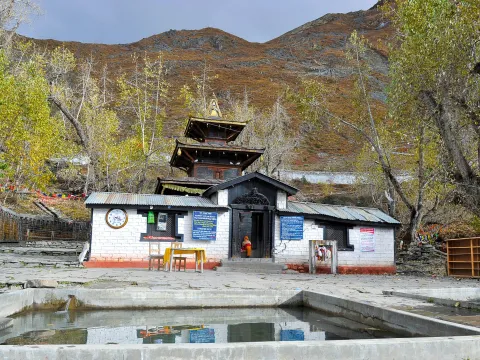
Situated in the Muktinath Valley, behind the Great Himalayan Range, at an elevation of 3,800 meters, Muktinath is a sacred site for both Buddhists and Hindus. It is accessible via the Annapurna Trekking Route in Mustang, Nepal. Hindu sacred texts like the Ramayana, Barah Purana, and Skanda Purana refer to Mukti Kshetra, which literally means the “place of freedom or moksha” or the location of the Muktinath temple. Pilgrims bathe ceremoniously at 108 miraculous streams of water. There is a sacred temple nearby named Jwala Mai that is revered by both Hindus and Buddhists. The temple is filled with an unquenchable blue flame.Thousands of Hindu followers go from all over the world to this temple each year. Thousands of people come to this temple each year because it is one of the most revered locations on earth for Buddhists and Hindus. The priests of this temple are a mix of Hindu gods and Buddhists. It is not allowed for a Jhuma (Priest) of this temple to be married.The fossil stones known as Shaligram, which Hindus revere, that were discovered sideways to the Kali Gandaki River are partly responsible for the location’s notoriety. According to legend, the fossil stones represent Lord Vishnu in stone form. The pagoda-style temple dedicated to Lord Vishnu has a straightforward architectural design. Its construction is thought to have occurred at the start of the 1800s. Given that the Vishnu idol is estimated to be sixteenth century old. For their devotion to Lord Vishnu, a large number of Hindu pilgrims travel there from Nepal and India. Chumming Gyatsa, meaning “Hundred Waters” in Tibetan, is the name given by Buddhists to it. Despite the temple’s Vaishnava origin, Buddhism also holds great regard for it.
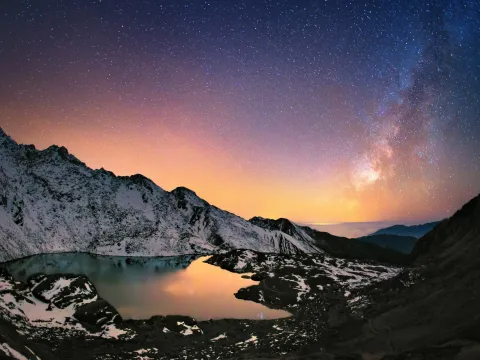
While there are numerous places to climb, Nepal is a great destination because it has so many breathtaking natural landscapes. Trekkers discover that there are countless places to see in Nepal when they arrive, as do avid travelers. The Gosaikunda walk is among the most stunning and well-liked locations to visit in a short amount of time. Unfathomable Gosaikunda Lake is among Nepal’s most idyllic trekking destinations. Trekkers from Nepal often visit the majestic Gosaikunda lakes trek, which is a gentle adventure trek. Compared to other well-known trekking and hiking routes in Nepal, the Gosaikunda Trek, also known as the Gosaikunda Tour, is a less congested track.There are several ways for you to travel to Gosaikunda. The travelers usually start their walk from Dhunche or Chisapani, according on their inclinations. That being said, our planned Gosaikunda hike begins at Dhunche.The five-day Gosaikunda trek in Nepal is the perfect combination of a unique and communal travel experience. It allows you to experience a high altitude hike in Nepal in a short amount of time.The five-day Gosaikunda trip is ideal for people who are pressed for time but still like to learn about hiking in the Himalayas. If you think these five days are not long enough, you can also change this trek to incorporate some other nearby trekking objectives.Experience the pinnacle of views of snow-capped mountains, jagged rocks, lush terrain, gorgeous green valleys, and breathtaking alpine lakes, including Langtang Lirung (7246m), Gangchhenpo (6388m), Dokpu (5930m), Naya Kangri (5846m), and Yala Peak (5500m).Visits to Gosaikunda Lake are pilgrimages that, when paired with exploring the natural world, have the power to absolve one of all sins. Gosaikunda Lake is a well-known pilgrimage site for both Buddhists and Hindus. During the full moon night in August, a significant gathering of Buddhist and Hindu pilgrims can be observed near the lake. Hindu mythology states that Lord Shiva tried to poison the universe to protect it from itself, which is how he created Gosaikunda. Too sick to stand the heat in his throat from the poison, he drove his trident through a mountain and drank the water that came out.The water from the mountains formed many beautiful lakes in the Langtang valley, such as Gosaikunda and Bhairav Kunda. This region has a total of 108 lakes. The total area of these stunning lakes is 1,030 hectares (4.0 sq mi). UNESCO designated Gosaikunda as a Ramsar Site on September 29, 2007. The Ramsar site is an international agreement for the preservation and sustainable use of wetlands.HighlightsTrekking to Gosaikunda Lake is considered a sacred act that can purge you of all your sins. Gosaikunda, at 4,460 meters above sea level, is a well-liked destination for Hindu pilgrims and hikers.The Gosaikunda hike is well known for examining Nepal’s Himalayan red pandas.A few wild animals can be found in Langtang National Park’s natural habitat, including the Himalayan mountain bear, Musk deer, Himalayan wild goat, and—most notably—flying insects and wildflowers. In addition, in the springtime, the woods are multihued with vibrant rhododendron, orchids, magnolia, and many other plant species, and the trail is bordered by assortments of high wildflowers.Discover the lifestyles of the Sherp and other ethnic communities. Sherpas and other ethnic groups with Buddhist gompas inhabit the area.
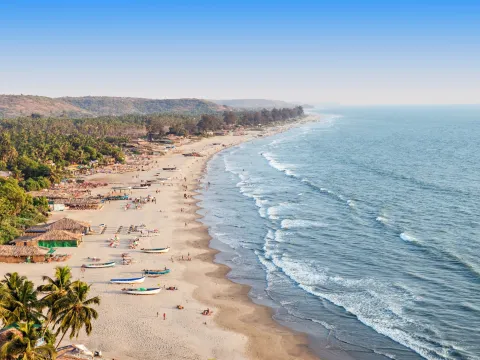
Millions of tourists visit Mumbai each year, drawn by its allure. Although it is home to one of the largest slums in Asia, Mumbai, the capital of Maharashtra, is also India’s economic centre. The most charming and exciting city in India is Mumbai, which is also known as the center of Bollywood. It is true that Mumbai never sleeps. where you can delight in Indian customs.GoaGoa immediately brings to mind beaches, sun, and sand. Travelers from both domestic and foreign countries choose it as their vacation spot. Its special attractiveness stems from its unusual blend of Portuguese and Indian architecture. If you need a vacation from your busy routine, pack your bags and travel to Goa. There, you can spend time swimming and tanning, or you can rent a scooter and tour the quaint villages.