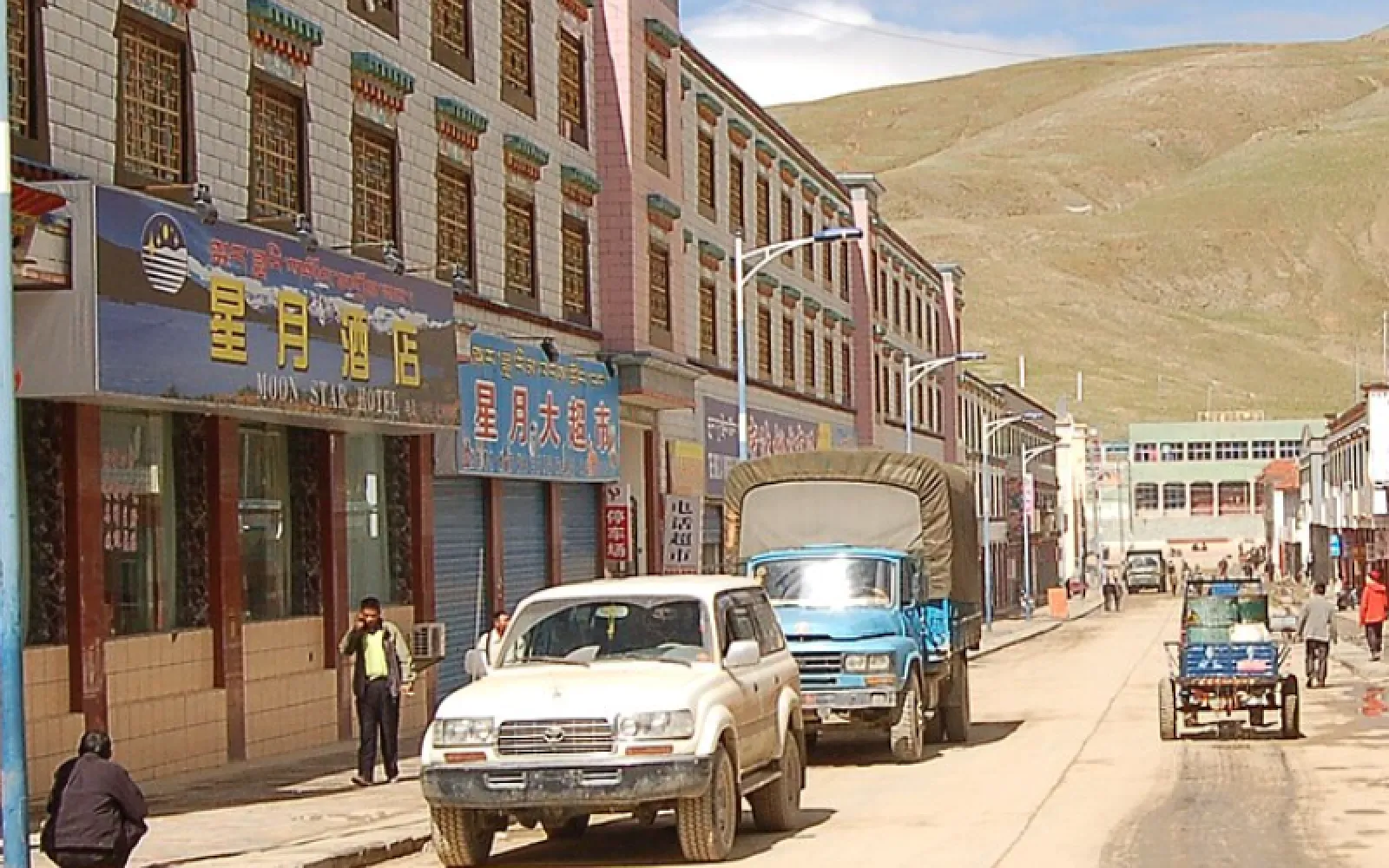
In the remote and windswept highlands of Tibet, where the vast plateau stretches endlessly beneath deep blue skies, Saga stands as one of the most significant towns on the sacred journey to Kailash Mansarovar. Every traveler, pilgrim, and adventurer heading toward the holy Mount Kailash inevitably passes through Saga Tibet, making it not just a stop, but a crucial milestone in the journey.
At first glance, Saga may appear as a quiet high-altitude settlement, but its importance goes far beyond its modest appearance. It serves as a vital place for acclimatization, rest, and spiritual preparation, allowing travelers to adjust to the demanding altitude before continuing toward the sacred region of Kailash Mansarovar.
More than just a transit town, Saga offers a powerful combination of Tibetan culture, raw natural beauty, and deep spiritual energy. Surrounded by vast plains, distant snow-capped mountains, and flowing rivers, Saga prepares both the body and the mind for the divine experience that awaits ahead
Located in western Tibet, Saga Tibet sits at a remarkable altitude of 4,640 meters (15,223 feet) above sea level. At this elevation, even simple activities feel slower, and the thin mountain air reminds travelers of the powerful environment they have entered.
This high altitude makes Saga one of the most important acclimatization points on the Kailash Mansarovar route, especially for those traveling from lower elevations like Kathmandu or Kyirong.
Key Distances from Saga
The journey from Kyirong (Kerung) to Saga covers approximately 230 kilometers and is often the first major stretch after entering Tibet. From Saga, the route continues toward the sacred Lake Mansarovar, which lies about 496 kilometers away and is a significant spiritual destination for pilgrims. Traveling slightly further from Saga, Darchen—located roughly 507 kilometers away—serves as the base camp for Mount Kailash and is the starting point for the revered Kailash kora (circumambulation).
Because of this strategic positioning, Saga Tibet is widely known as the gateway town to Kailash Mansarovar, linking Nepal, central Tibet, and the sacred Mount Kailash region. It is also the last major town where travelers can find proper accommodation, supplies, and road connectivity before entering the more remote and spiritually intense landscapes of western Tibet.
The journey from Saga Tibet to Kailash Mansarovar is undoubtedly one of the most breathtaking and transformative parts of the entire pilgrimage. As you leave Saga behind, the landscape begins to change dramatically, unfolding into a surreal panorama of untouched wilderness.
Travelers along this route experience:
The journey is not only visually stunning but also deeply spiritual. The silence of the plateau, broken only by the wind and the distant movement of animals, creates a sense of inner stillness. This route perfectly captures the essence of the Kailash Mansarovar Yatra, where the outer journey mirrors an inner transformation.
The culture of Saga Tibet reflects the timeless traditions of Tibetan life, shaped by harsh geography, spiritual beliefs, and a deep connection to nature.
Local People
The people living in Saga are primarily Tibetan nomads and semi-nomadic communities who have adapted to life in one of the world’s most extreme environments. Their lifestyle revolves around:
Despite the challenging conditions, the people of Saga are known for their warm hospitality, resilience, and peaceful nature.
Spiritual Culture
Spirituality is deeply woven into everyday life in Saga Tibet. As you walk through the town or travel along the route, you will encounter:
One of the most important cultural events is the Saga Dawa Festival, which celebrates the birth, enlightenment, and passing of Lord Buddha. During this time, pilgrims gather in large numbers, and the spiritual energy of Saga becomes even more powerful—especially for those on the journey to Kailash Mansarovar.
As the last major town before reaching Kailash Mansarovar, Saga Tibet provides essential facilities for travelers preparing to enter more remote areas.
Hotels and Guesthouses in Saga
While the accommodations in Saga are modest compared to cities like Lhasa or Shigatse, they are sufficient for rest and recovery. Most travelers spend at least one night here to adapt to the altitude and regain energy before continuing the journey.
Despite its remote setting, Saga Tibet is surrounded by remarkable natural and spiritual landmarks that enhance its importance on the Kailash route.
Drong Chu River: Flowing gently through Saga, the Drong Chu River adds a sense of calm and balance to the rugged landscape. Its presence brings life to the otherwise dry plateau.
Gangdise Mountains: These sacred mountains near Saga are closely associated with Mount Kailash and hold deep spiritual significance in Tibetan belief systems.
Gongzhucuo Lake (4,680 meters): Located on the way from Saga to Mansarovar, this stunning freshwater lake appears like a hidden gem amidst the barren landscape, offering a peaceful and photogenic stop.
Paryang Desert: One of the most unique features of the route, the Paryang Desert lies between Saga and Kailash Mansarovar. Its golden sand dunes create a striking contrast against the snowy peaks and blue skies, showcasing the dramatic diversity of Tibet’s terrain.
Saga Tibet plays a crucial and irreplaceable role in every Kailash Mansarovar journey. It is not just a stop—it is a preparation ground for the sacred experience ahead.
Saga serves as:
Without stopping in Saga, the journey to Kailash Mansarovar would be significantly more challenging, both physically and mentally.
To make your journey through Saga Tibet safe and comfortable, consider the following:
Saga Tibet is far more than a stop along the way—it is the heart of the Kailash Mansarovar route. Its high-altitude environment, rich Tibetan culture, and spiritual atmosphere make it an unforgettable part of the journey.
As travelers leave Saga and move deeper into the sacred lands of Kailash Mansarovar, the transformation becomes evident—not only in the landscape but within themselves.
The mountains grow higher, the air thinner, and the silence deeper. And somewhere along that journey, between Saga and Kailash, the pilgrimage becomes more than travel—it becomes a spiritual awakening.
Saga is where the journey truly begins.
Contact Mission Nepal Holidays for booking.